Reminiscence: A Short Film (2025)
When your life flashes before your eyes, what tears will it make you cry?
The Concept
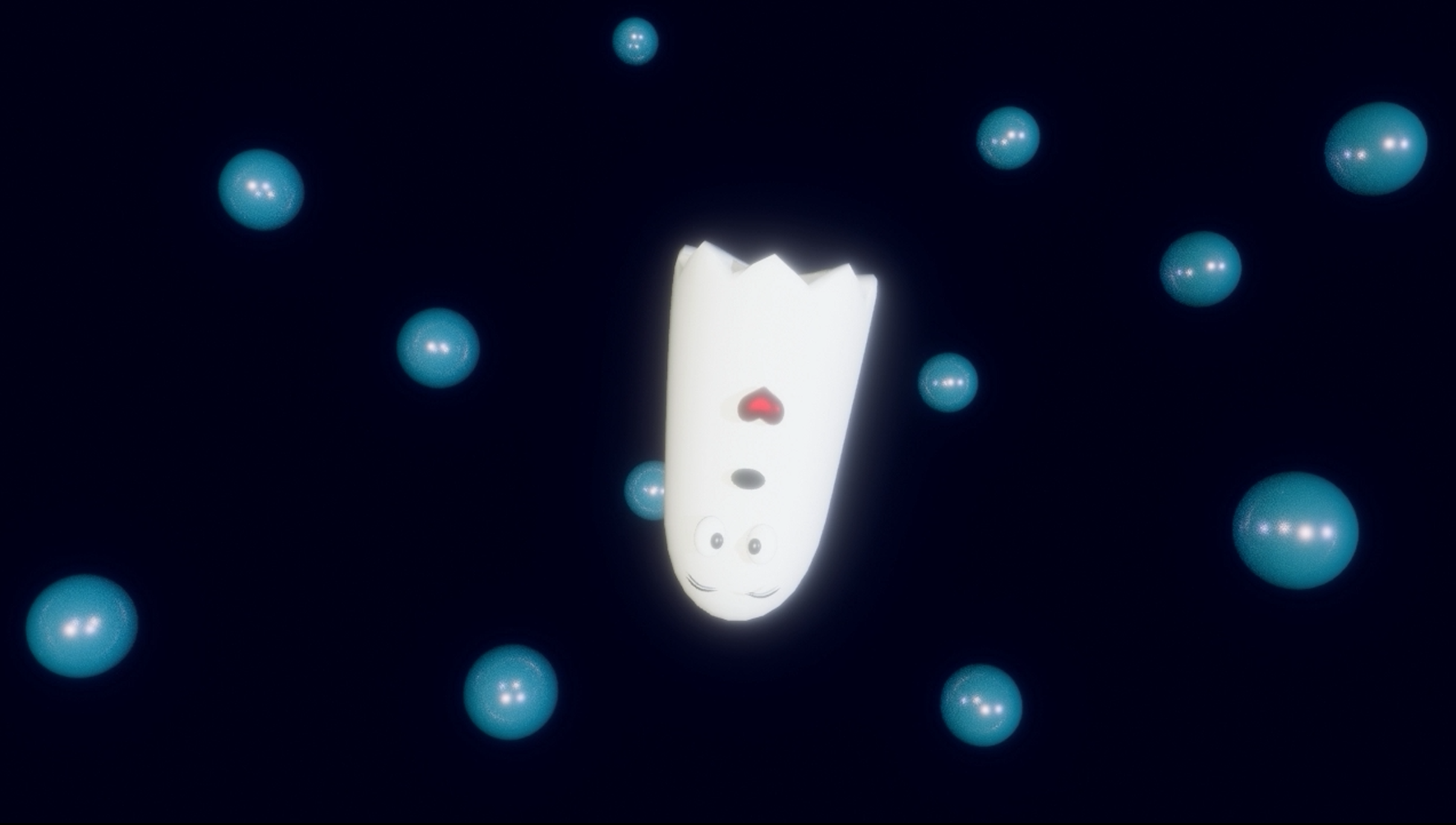
This short film follows a little ghost with a big heart, and his journey through limbo. Surrounded by happy memories from his past, he struggles to accept that his life has ended, and initially tries to run from his new reality. Eventually, though, he accepts that it's time to move on, and peacefully passes through to the afterlife. The work explores themes of nostalgia, love, loss, grief, and the bittersweet struggle we all face in letting go of the past in order to move forward.
This animation was built around my 2021 composition of the same name, Reminiscence. It’s a well-known fact that the choice of soundtrack can wildly influence a viewer’s experience of a film, and Reminiscence already had a very strong narrative element - drifting through fragments of a person’s life as their heartbeat dwindles to a stop. It was almost begging to tell a sad story.
When I wrote the original Reminiscence, it took on the form of a “documentary” of a person’s life, as seen through their fragmented memories. Here emerged the concept of a life flashing before one’s eyes as they straddled the liminal space between life and death.
The Process
Put bluntly, this project nearly had me seeing my own bright white light. I was completely underprepared and under-informed about just how much time, patience, and knowledge of both Autodesk Maya and 3D animation principles and procedures would be required to pull of such a project - which, in hindsight, was a very ambitious choice for a total beginner.
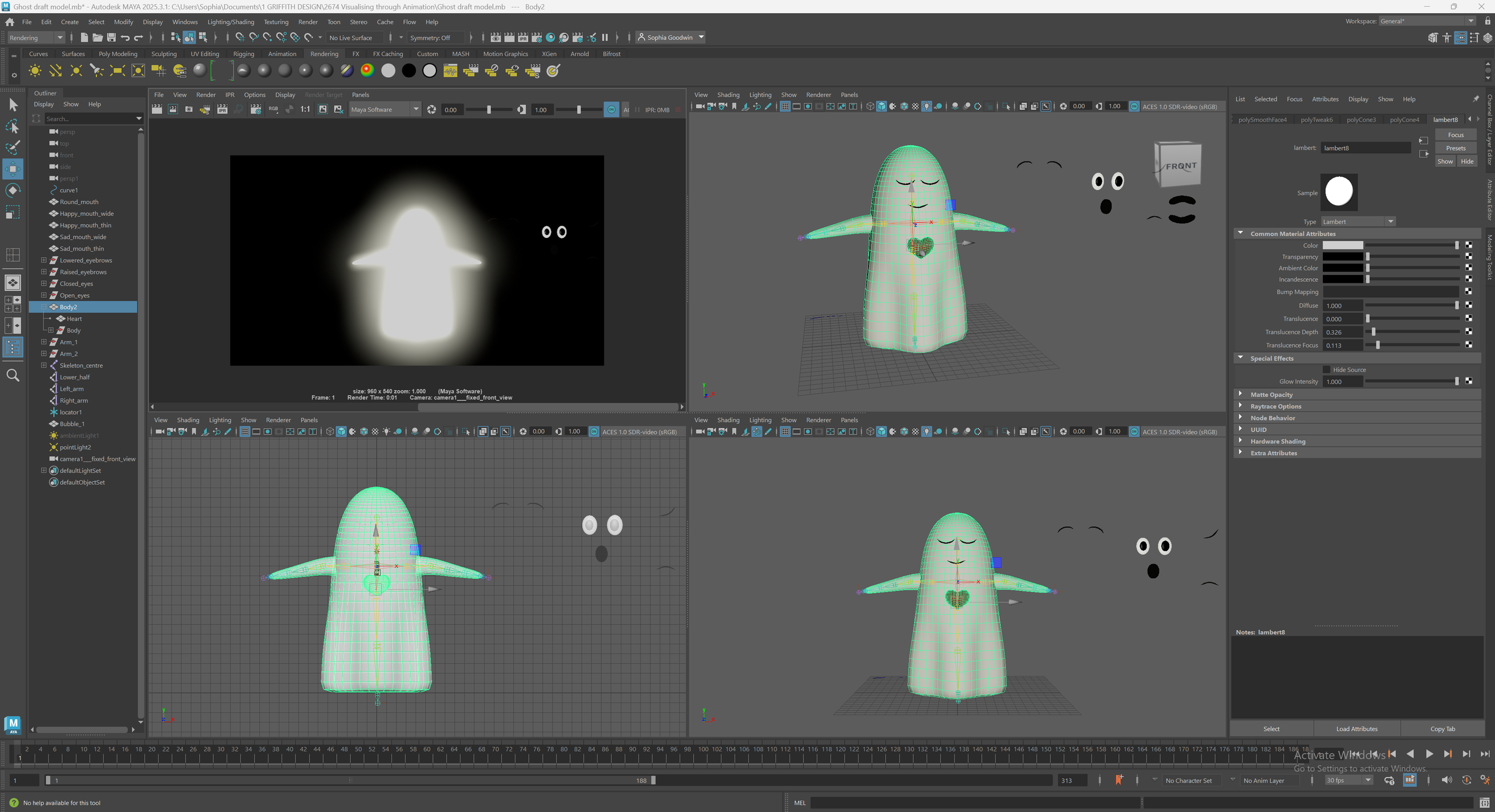
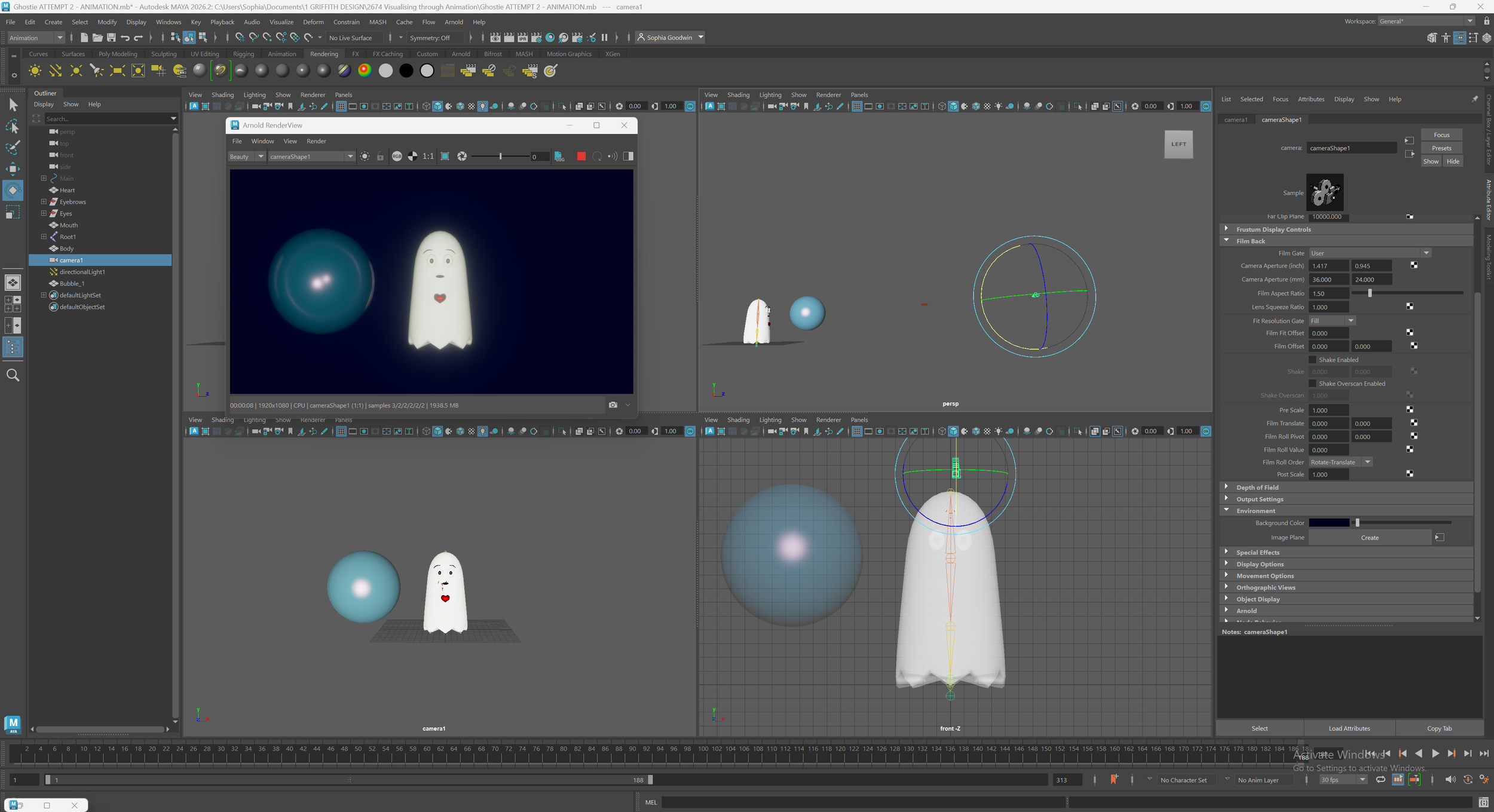
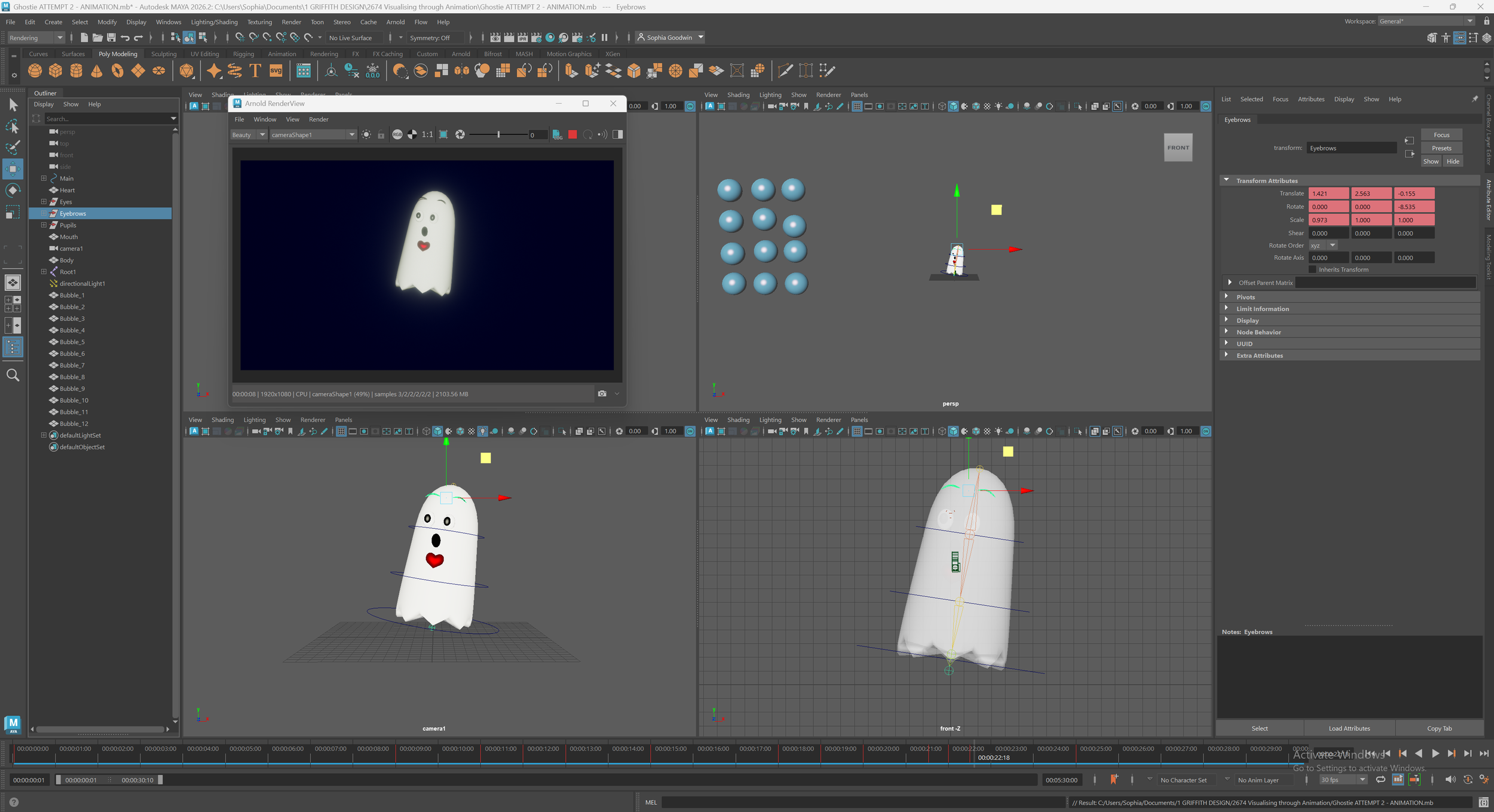
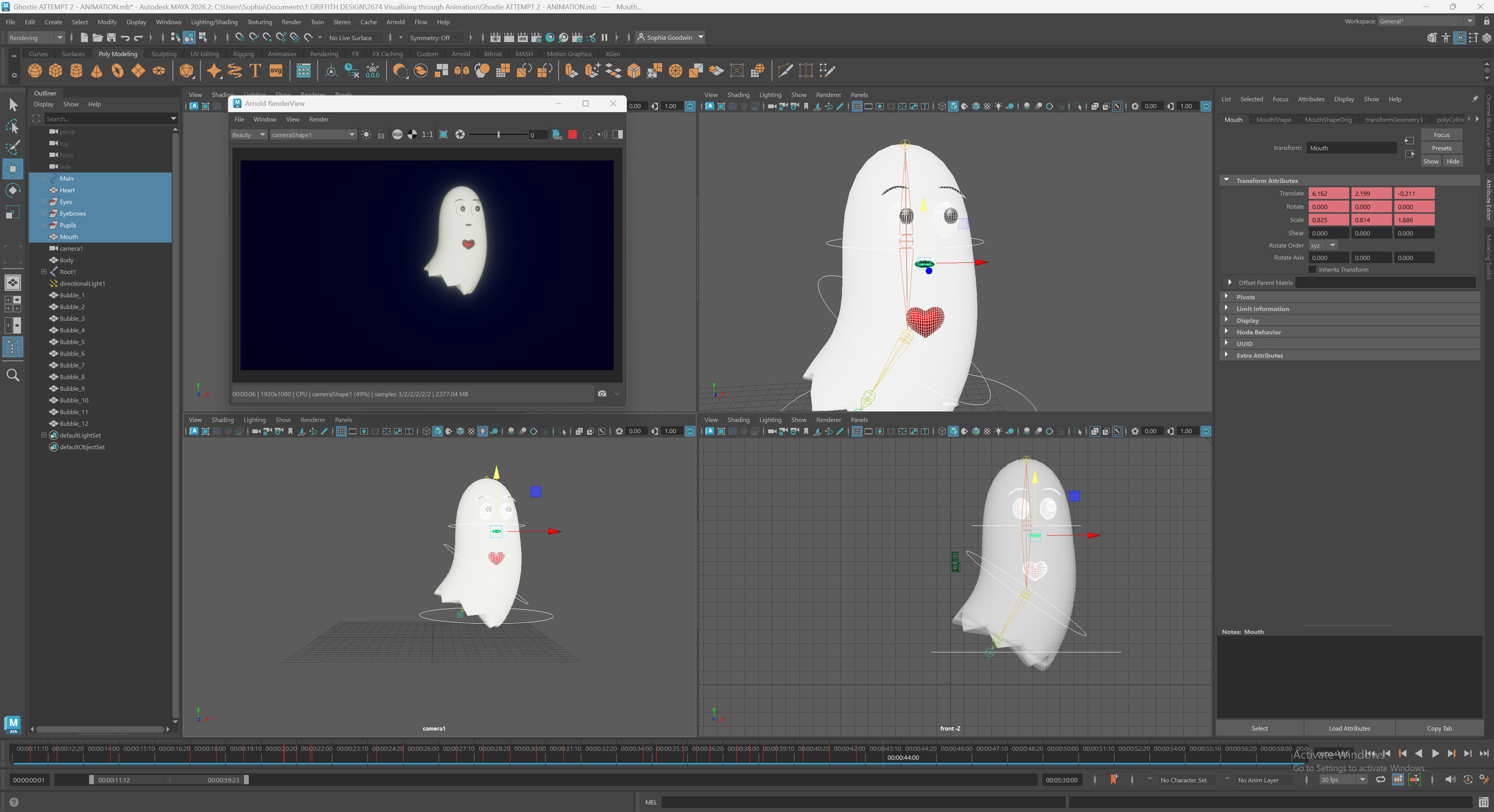
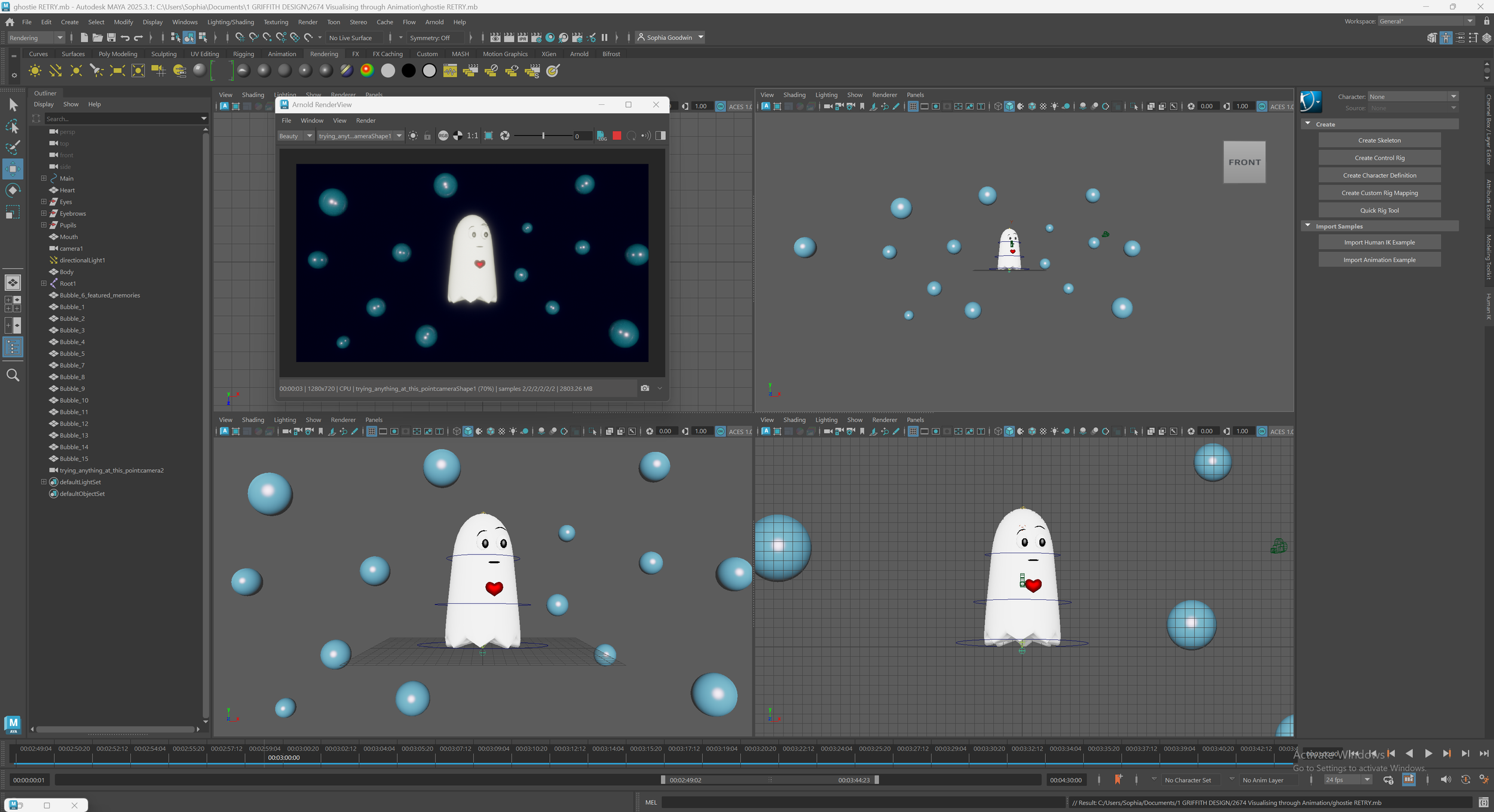
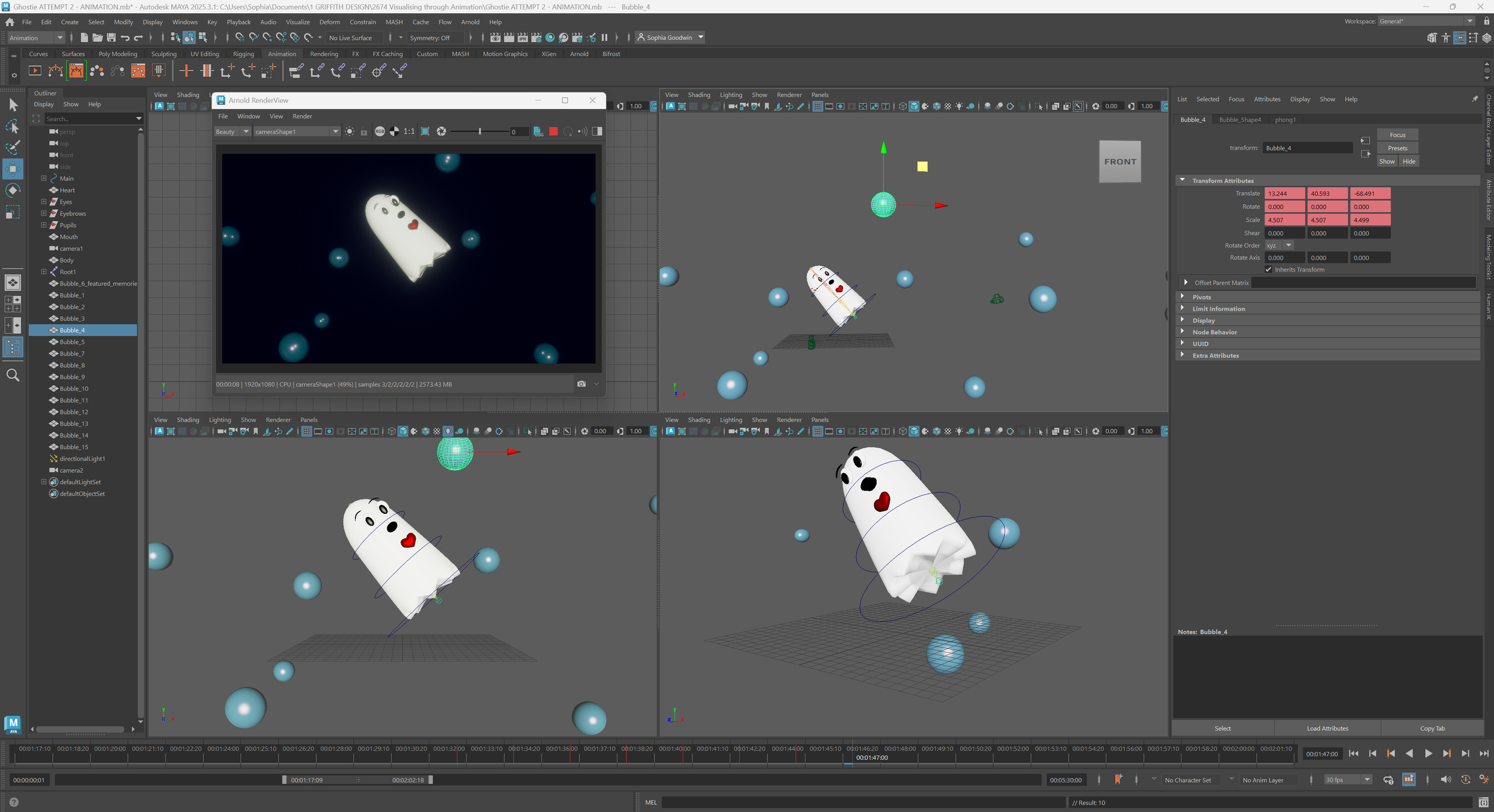
As seen in the accompanying process pictures, my “ghostie” design originally began with arms. Unfortunately, my understanding of rigging was limited and early attempts at building a cooperative skeleton were disastrous; thus, the armless design was born. I wanted the ghostie to bob along almost like a jellyfish, a movement which I somewhat managed to capture. With so many moving parts involved (as the ghostie’s facial features were all keyframed separately to the body), the potential for things to go horribly wrong at any point was enormous. Early in this process I had created a “face library”, in which I experimented to see how many varied facial expressions I could generate for the ghost purely by manipulating the size, shape, and placement of his mouth, pupils, and eyebrows. This proved very valuable in planning out keyframe-able movements in advance, allowing me to create a highly expressive character design.
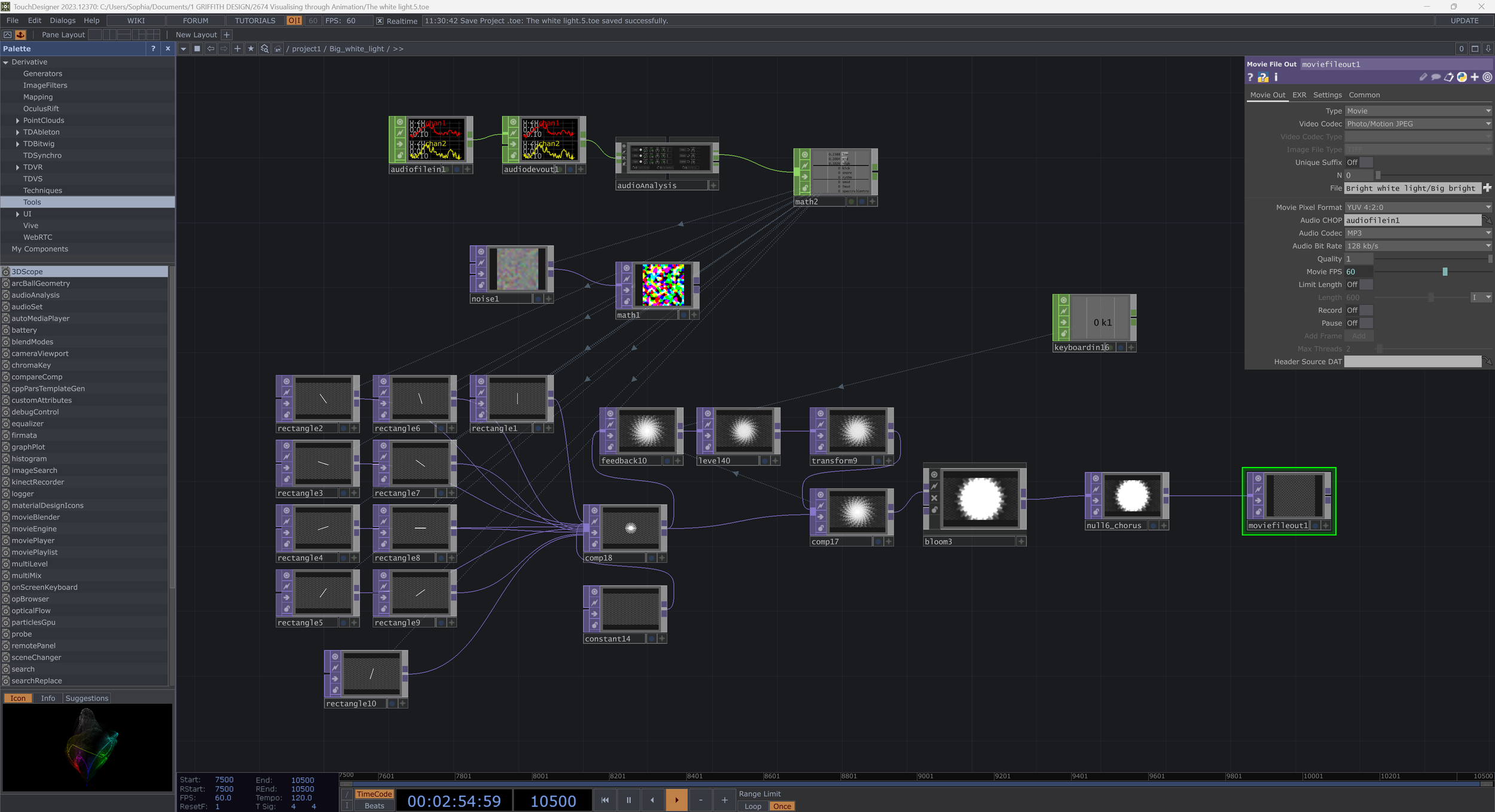
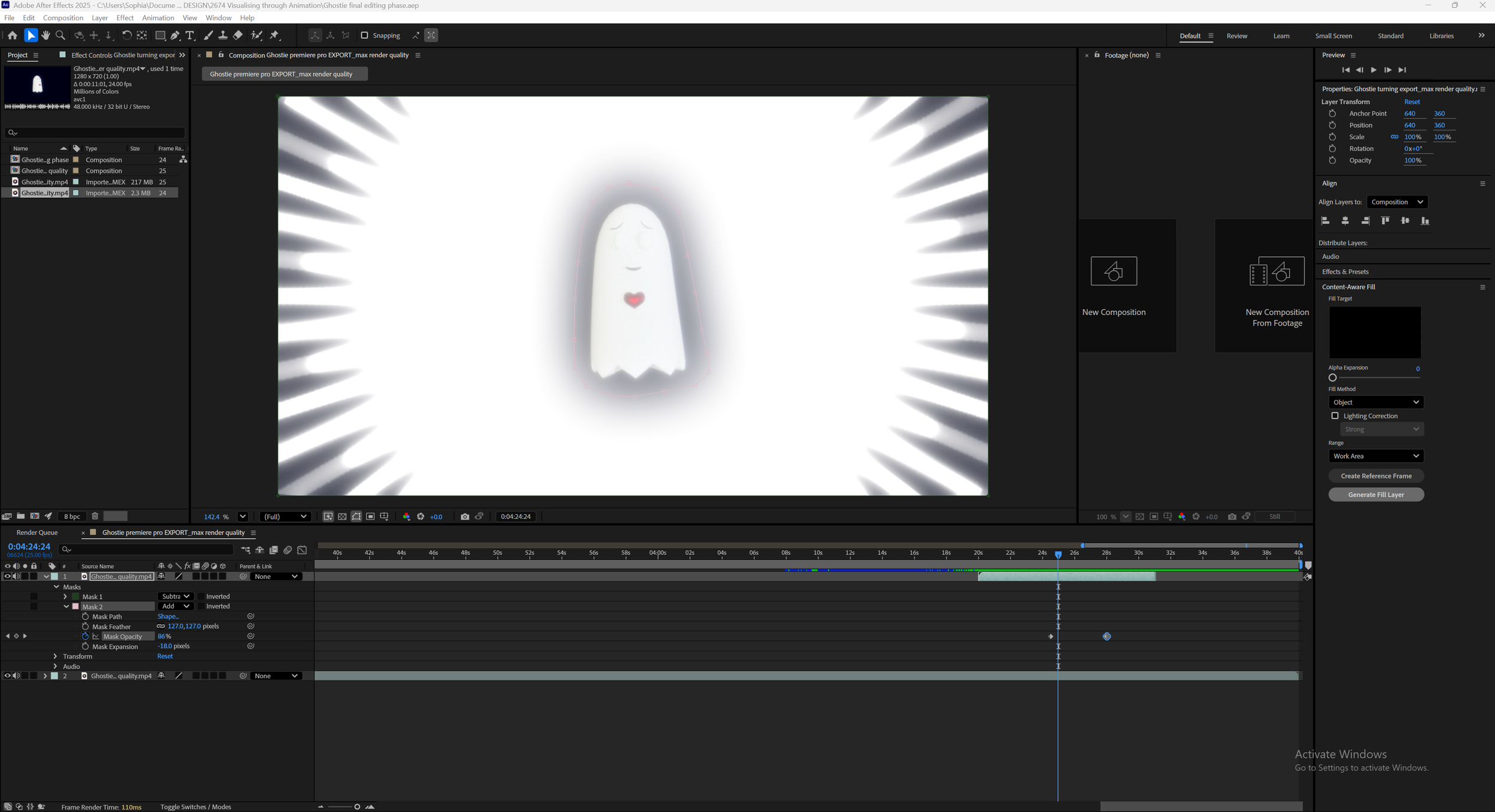
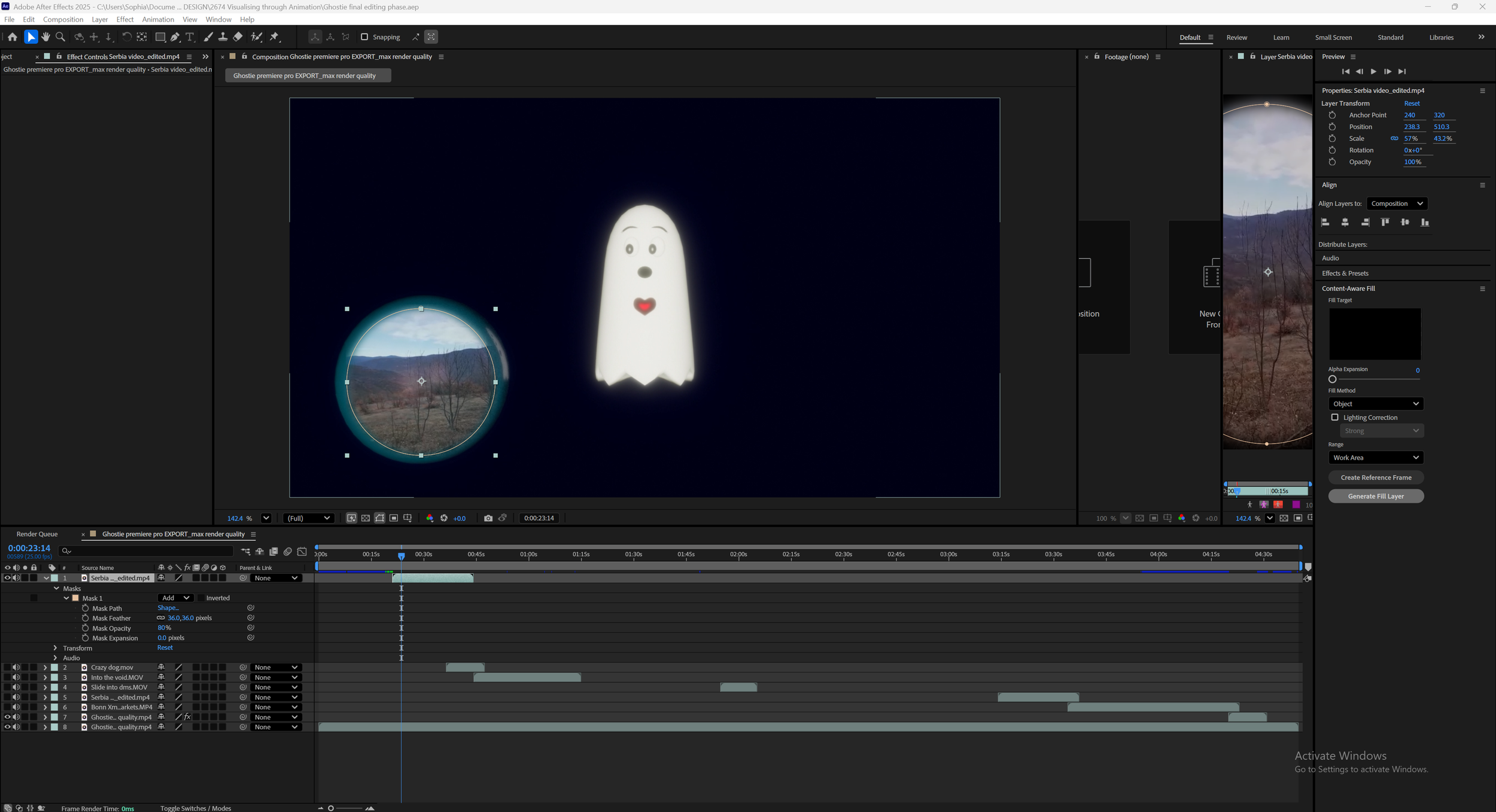
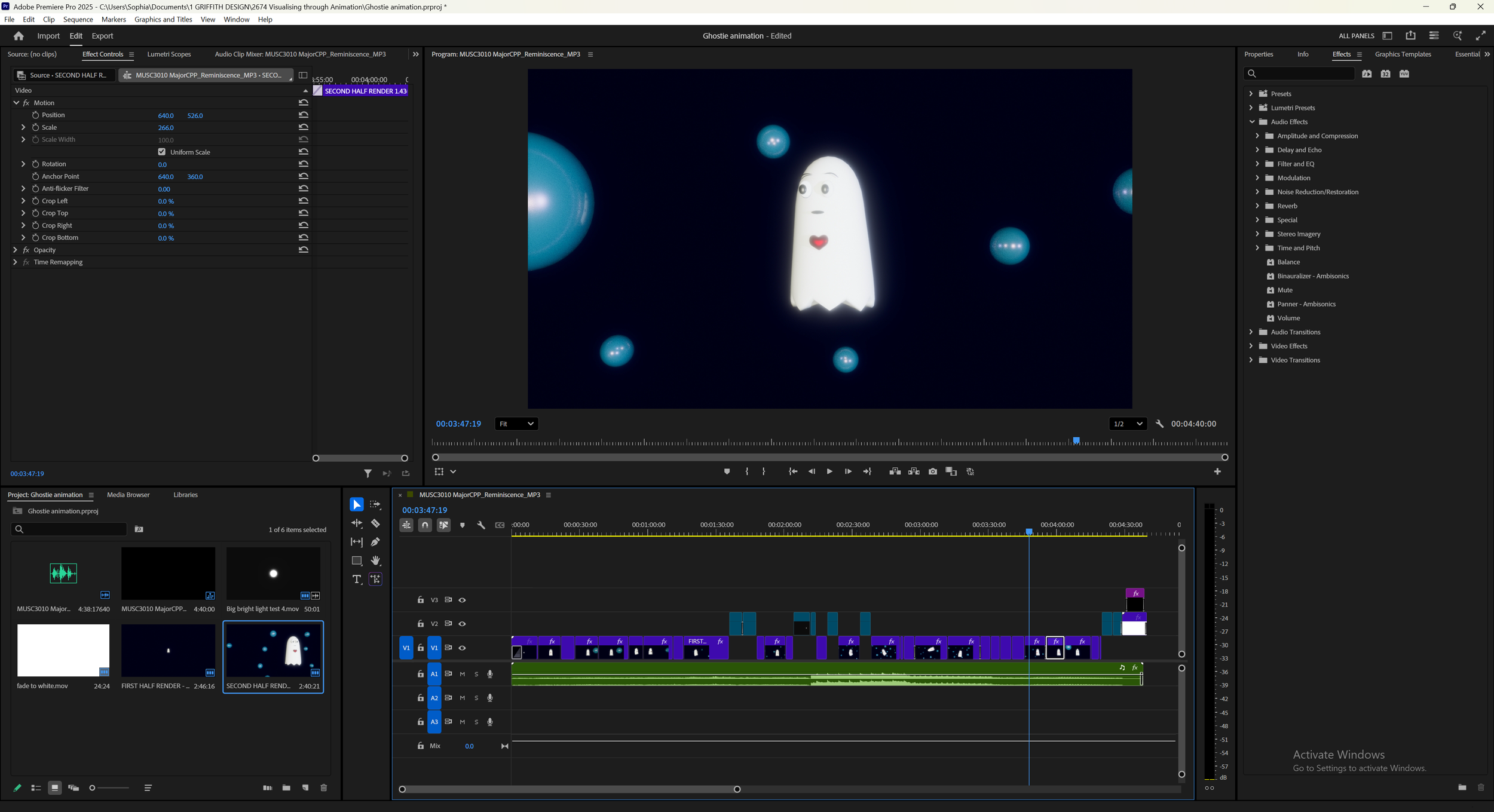
Aside from the laborious process of digital stop-motion, the greatest challenge of this project was the pacing, particularly as the narrative turning points in the animation needed to line up with specific changes in the music. Before even opening any softwares, I prepared for this challenge by created a highly detailed timeline of the song and timestamped storyboard, to help estimate how many seconds each sequence of movements should be keyframed over. Although much of the animation’s pacing still turned out quite misaligned with the audio, these issues were easily rectified in the video editing phase - a process which I was much more familiar and confident with. In this phase I was also able to layer in motion-tracked real-life footage, as well as edit in the climactic “bright white light” of the afterlife, an effect which I created in TouchDesigner as again, I lacked the confidence in Maya to attempt creating such an effect with an in-program light source.
The real-life video overlays inside the “memory bubbles” were taken from my personal camera roll, captured between 2017 and 2020. They are also the original videos that the audio samples used in Reminiscence were extracted from, tying the visuals more intimately to their soundtrack.
The Tech
This work was animated in Autodesk Maya using keyframe animation.
Real-life video overlays motion-tracked in Adobe After Effects.
“Bright white light” effect created in TouchDesigner.
Final video edited in Adobe Premiere Pro.
Original score composed in Ableton Live 11 Suite.