Bittersweet Haze (2026)
Bittersweet Haze explores the complex and bittersweet nature of nostalgia, and the sinking feelings of isolation it so often brings with it...but look closely and you'll see the gentle glimmer of warmth and hope that shines through.
Thank you to the team at Ikonix for having me as an intern and supporting me technically and creatively through this journey. Special thanks to Nathan Smith for patiently dedicating so much of your time to helping me bring my vision to life.
The Concept
Upon commencing my internship with Ikonix, I learned that February was typically a very quiet period for the company, with almost no current client projects that I could participate in. Instead, it was suggested to me that I could complete a project of my own choice, with total creative freedom granted and mentoring available from the Ikonix team members at every step of the way. Naturally, I was thrilled by this proposition.
There were three main considerations that went into this brief:
To create a “signature” portfolio piece for me to showcase my technical design skills
To get my audio and performance skills involved in the process
To utilise the great variety of industry technology at my disposal
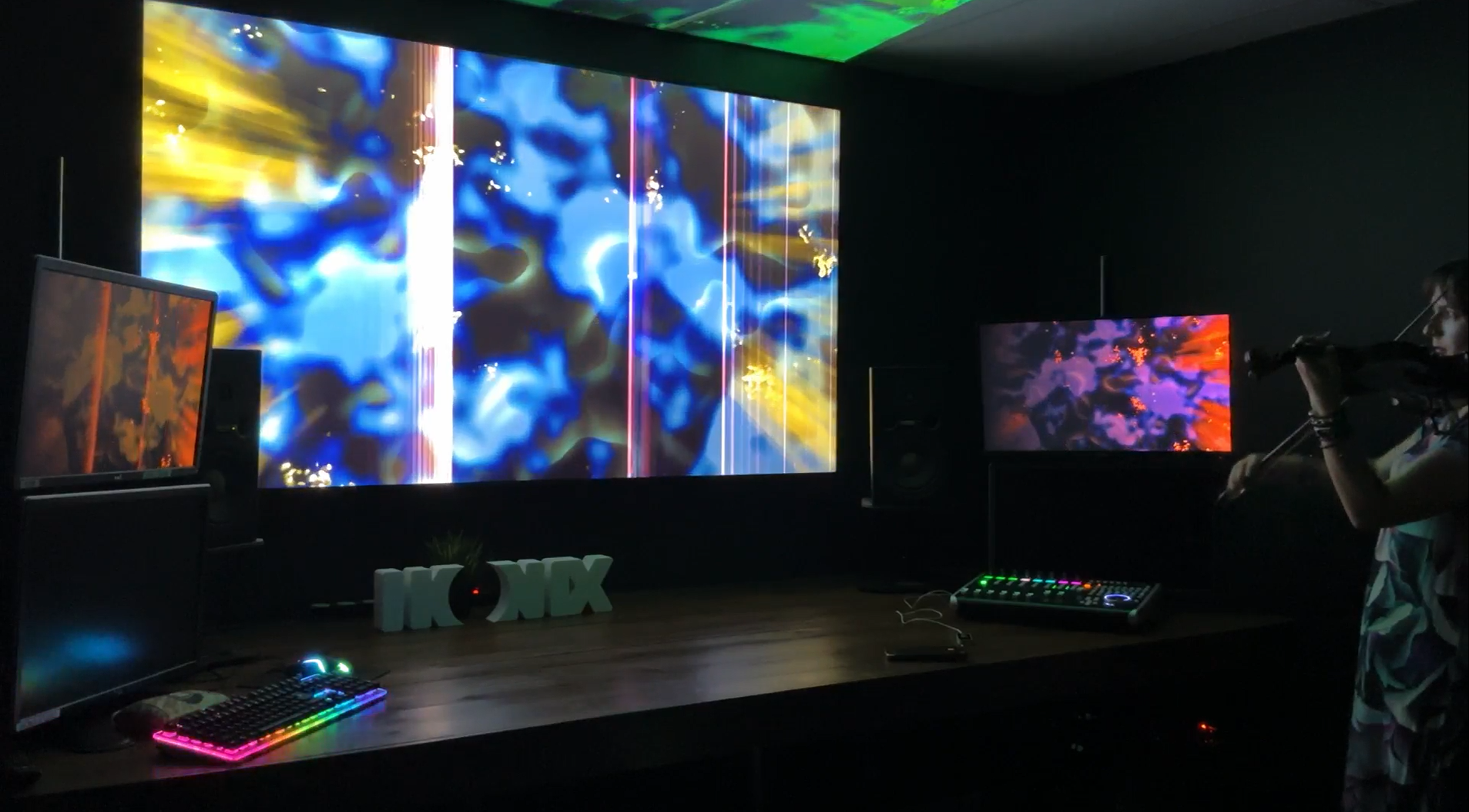
A few days of researching, brainstorming, and tinkering produced the idea of a medium-scale audiovisual work, featuring new music, multiple screens, projection mapping, and a live violin performance.
The Process
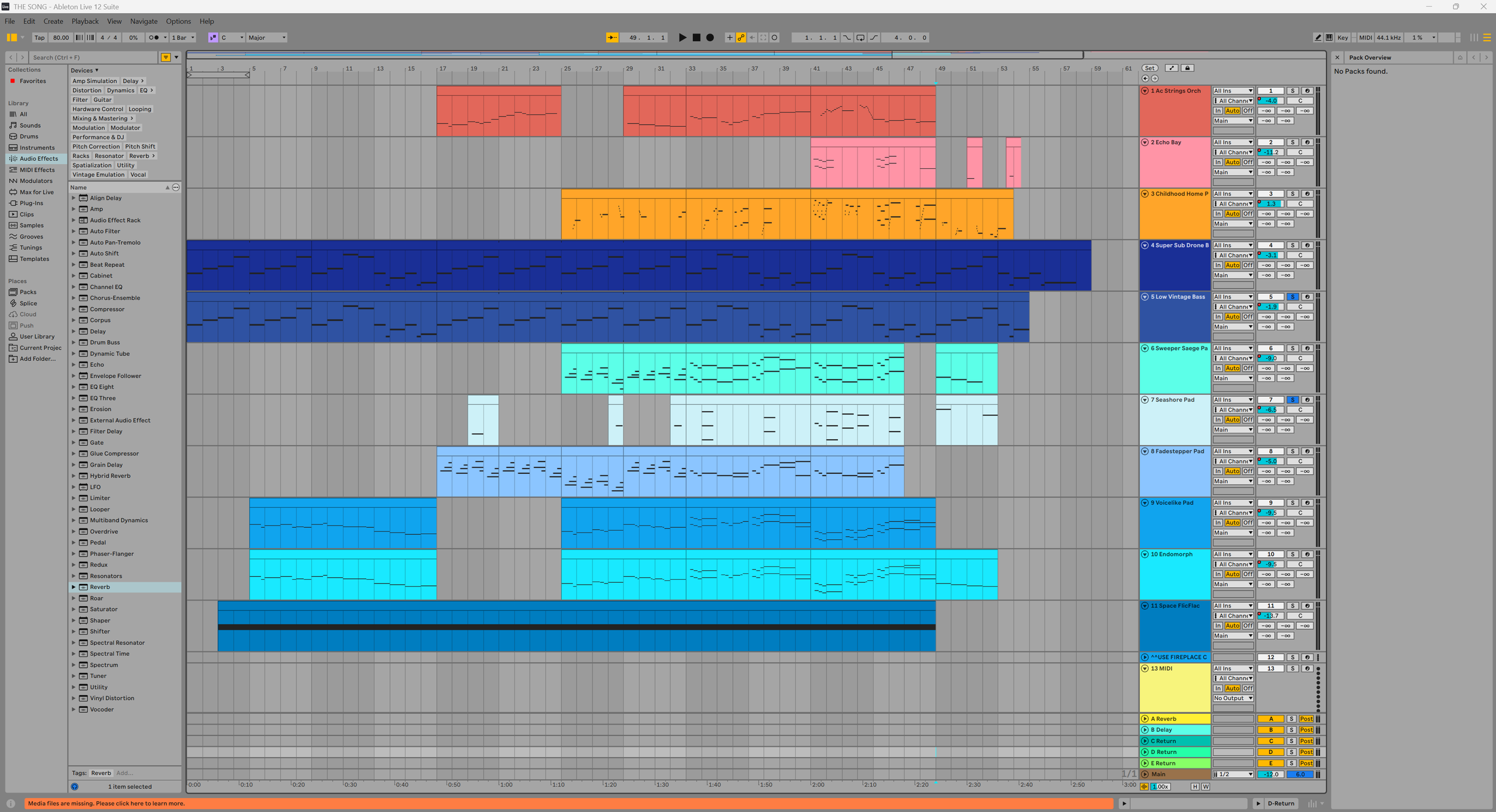
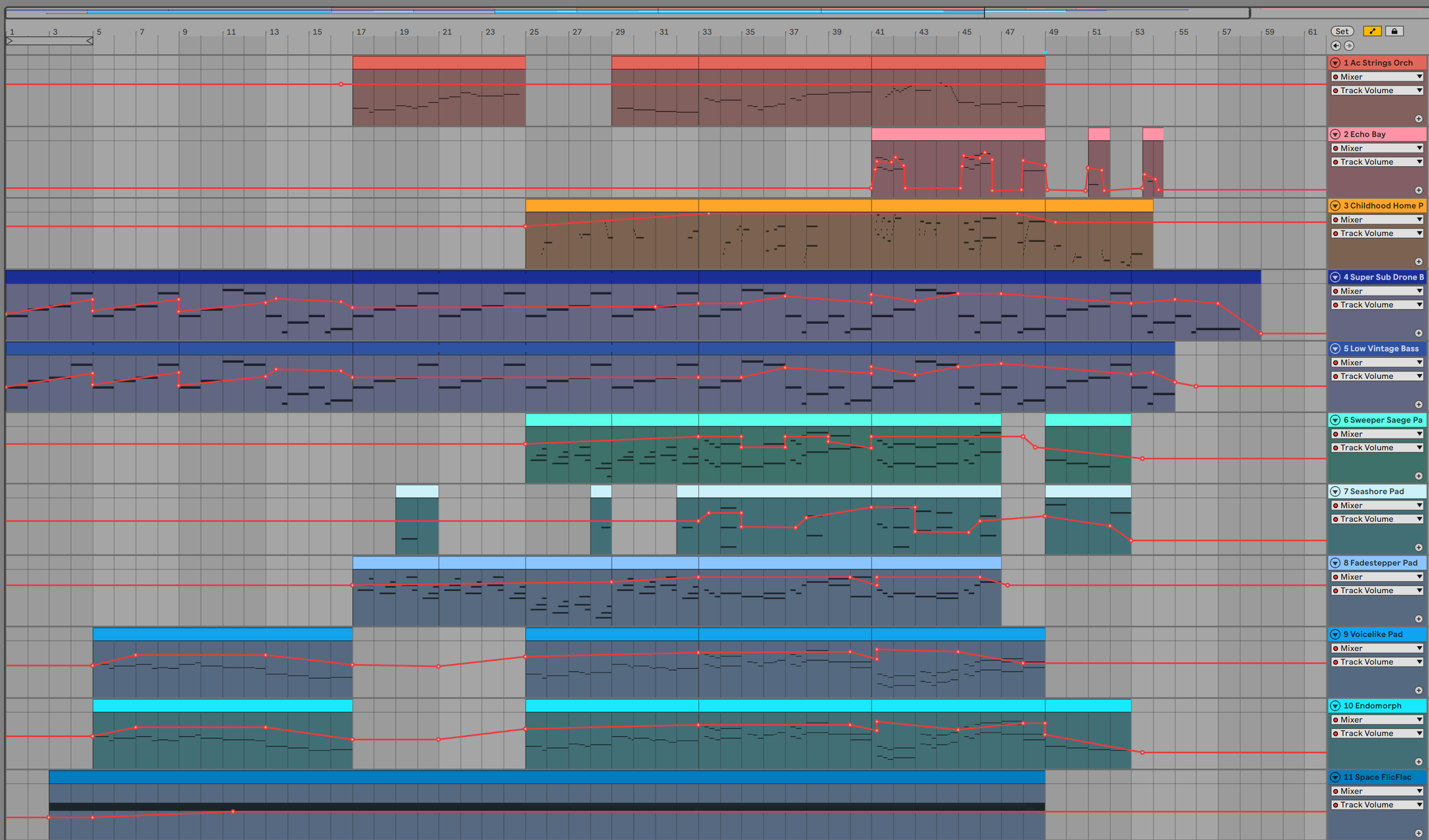
This work was produced over the course of 16 days in collaboration with Ikonix Australia as part of a coursework internship through Griffith University. While many of the visuals were developed collaboratively with the Ikonix team, the score was my own original composition. This song was composed in approximately one week, and had a solo violin line written in for me to perform. Due to time constraints, I unfortunately had to restrict the audio mixing to just volume levels, and skip the panning.
Much of the visual design was born entirely of experimentation, in which I did a rapid-fire exercise to see how many strange visuals I could build in TouchDesigner in a few hours. The goal was to push my creativity into unconventional realms. The blue backgrounds (for which I took inspiration from what my synaesthesia saw from my music) and motion-tracked visuals were born from this process. Visuals produced later, such as the sparkles and radiant light, were tailored more intentionally to specific elements and sections of the music.
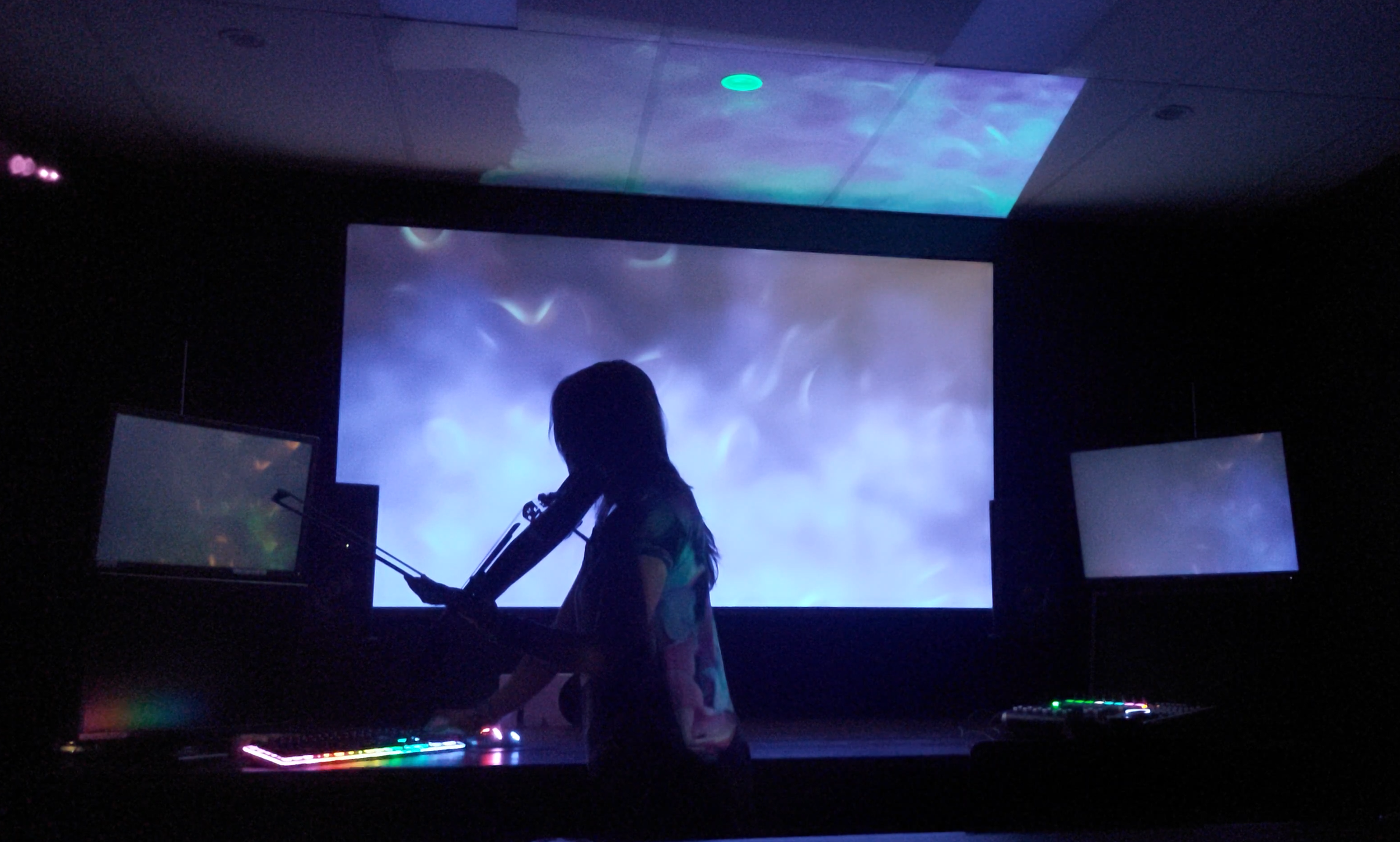
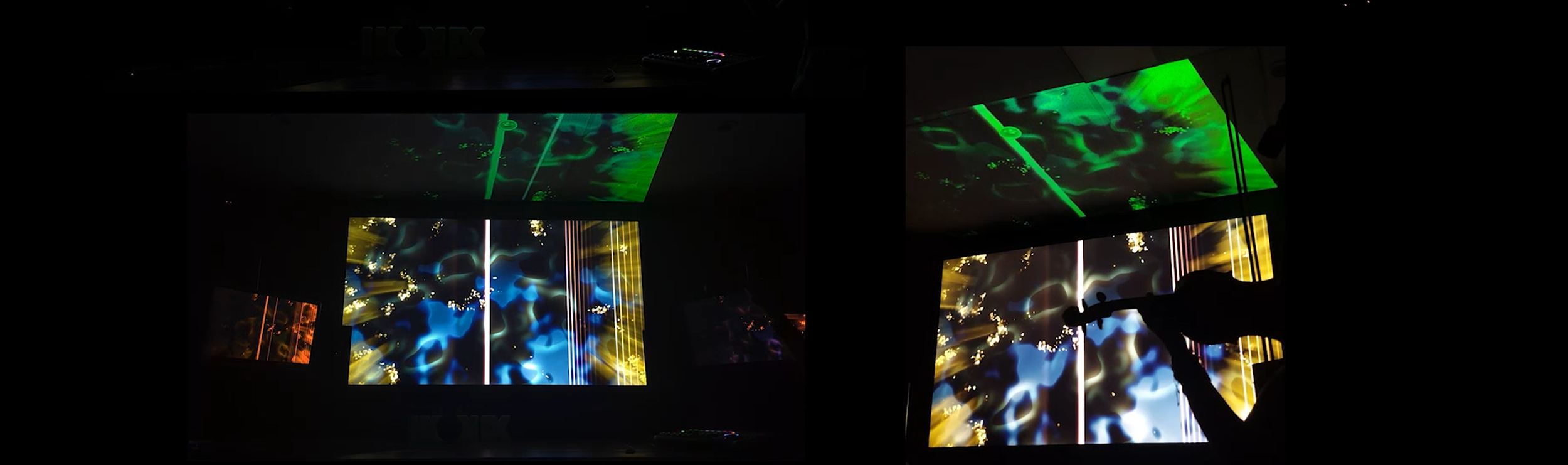
Every visual element in this work was connected directly to an instrument in the music. I wanted a much more refined and controlled degree of audio-reactivity for this work, so instead of connecting the visual parameters to the music’s frequency bands like I had done in previous audiovisual works, I instead focused on doing more complex mixing of the volume levels of each individual track. I then exported several chosen tracks individually and set their volume levels as the audio input to their respective visual parameters. The vertical lines were connected to the live audio input from my violin, the layered blue backgrounds were connected to the bassline and a textural instrument, the sparkles were connected to the tinkling piano, the radiant light was connected to another textural instrument. The spotlight effect was connected to a motion-tracking device, and the intensity of the pink noise within the spotlight was connected to the height of my hand above the tracker. The entire visual display was also mirrored onto the two monitors flanking the main screen, and tinted for greater visual variety.
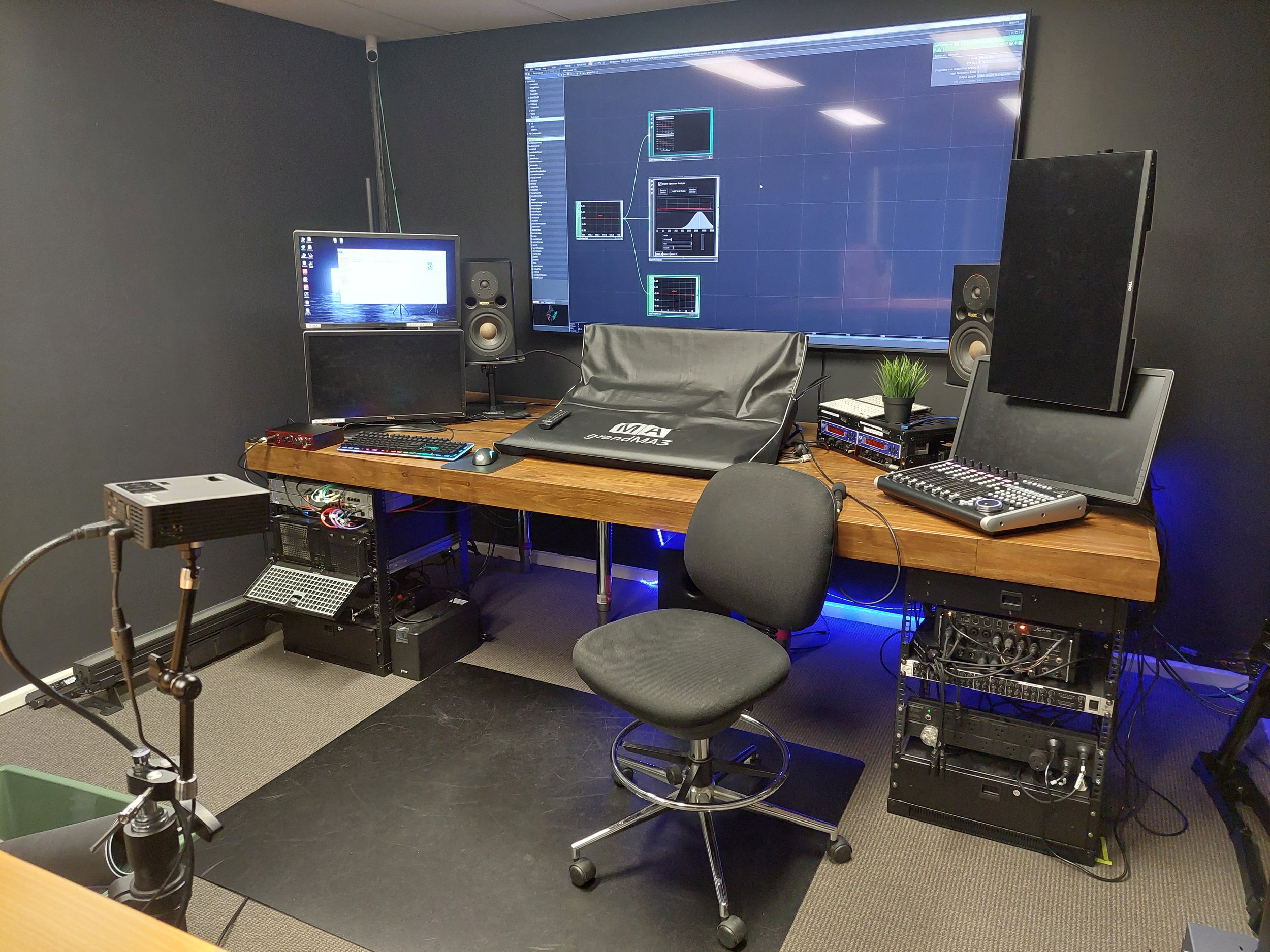
The final stages of the project were an iterative process of extensive tinkering and refining, particularly of the violin visuals. I had a lot of assistance from team member Nathan on refining this visual, as the vertical lines couldn’t be seen unless there was audio input through the microphone, and I physically couldn’t play my violin and work in TouchDesigner simultaneously. I later took charge of carefully adjusting the gain level on the microphone to clearly pick up my violin while not capturing the whirring of the computer server that shared the studio room. We also spent some time carefully arranging the projector on the floor before the desk, and projection mapping it to the ceiling panels.
On the day of the big “performance”, we set up multiple camera angles through the room and took four video takes of the performance. As the visuals were quite similar each time, this gave us more than enough quality footage and variety of angles for post-production editing later. I took the time afterwards to record a few more audio-only takes of my violin performance, as I wasn’t happy with how I had performed the first few times. I applied some EQ and reverb to the final violin track later, both to soften the computer server noise, and to make the tone of my instrument sound richer and more lush to blend better with the rest of the audio. Editing the footage together into the final video seen here took place after the internship had concluded.
The Tech
Composed in Ableton Live 12 Suite. Visuals produced in TouchDesigner.
External tech used includes Leap Motion tracking sensor, projector, and Shure SM57 microphone.
Filmed on four devices: film camera with 8k resolution, one iPad, and two smartphones.